
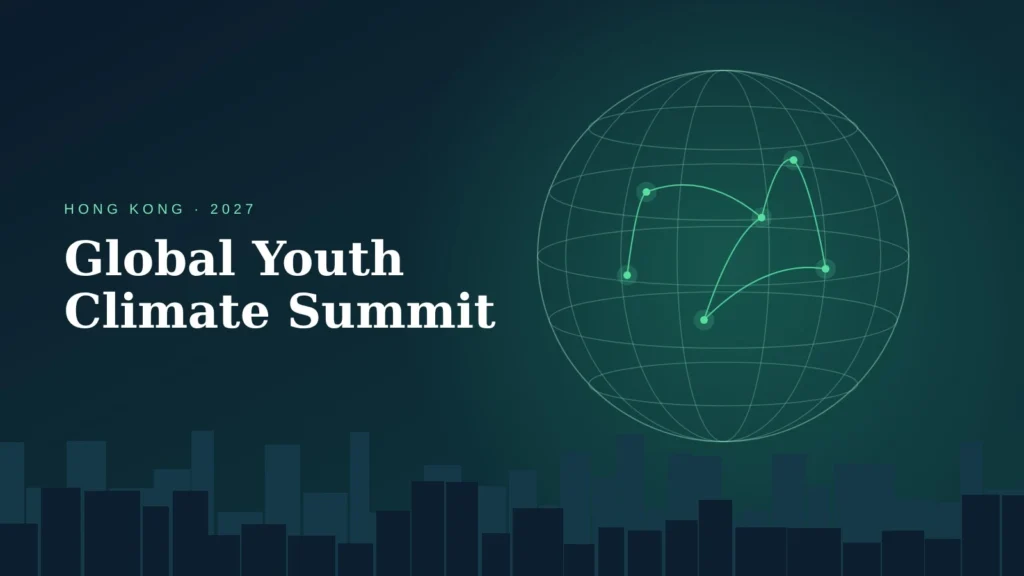
Climate change is no longer a challenge that can be addressed through awareness campaigns and long-term promises alone. It requires practical solutions, informed leadership and collaboration between communities, businesses, researchers and policymakers. Young people have an important role in this transition because they can bring fresh perspectives, local knowledge and new approaches to climate action.
Against this background, the Global Youth Climate Summit 2027 (GYCS 2027) will bring together young leaders from different regions to explore practical climate solutions and develop the skills needed to put ideas into action. Organised by the Global Youth Leadership Center, the summit is scheduled for March 10–13, 2027, in Hong Kong, with both in-person and online participation.
Hosted in partnership with the Division of Environment and Sustainability at The Hong Kong University of Science and Technology (HKUST), the event will focus on moving from climate commitments towards measurable outcomes.
Global Youth Climate Summit 2027: An Overview
The central theme of GYCS 2027 is “From Pledges to Proof.” It reflects a growing need to evaluate climate initiatives not only by their promises but also by the results they deliver.
According to the official summit programme, the event expects to bring together 500 young leaders from Hong Kong, the Chinese Mainland and other parts of the world.
The summit is designed for participants interested in climate solutions, environmental protection, leadership development and community-based initiatives. Importantly, applicants do not need a formal background in climate science. The programme is open to people from different academic and professional fields.
Its purpose is to connect participants with scientists, companies and young innovators, while helping them understand how climate solutions can be applied in their own communities.
Why Youth Leadership Matters in Climate Action
Climate change affects communities differently, creating challenges related to food security, water resources, infrastructure, biodiversity and public health. Addressing these issues requires coordinated action at international, national and local levels.
The IPCC Sixth Assessment Report: Synthesis Report explains that climate risks increase with every additional increment of global warming. It also highlights the importance of rapid emissions reductions and accelerated adaptation measures.
This makes participation from younger generations particularly important. Young people are not only future decision-makers; many are already involved in environmental education, community adaptation, conservation, clean energy initiatives and climate entrepreneurship.
The importance of youth participation is also recognised in UNESCO’s 2026 Youth Report, “Lead with Youth”. The report examines how young people and students participate in education decision-making and recognises their potential to contribute to long-term change.
GYCS 2027 provides a platform where these leadership ideas can be connected with practical climate discussions, professional learning and project development.
Six Major Climate Solution Tracks at GYCS 2027
The summit will explore six solution areas, allowing participants to examine different dimensions of the climate challenge.
1. Net-Zero Cities and Infrastructure
Cities need infrastructure that can support growing populations while reducing environmental impact. This track will explore approaches connected to sustainable urban development, efficient infrastructure and lower-emission communities.
2. Clean Energy for All
Access to reliable and cleaner energy is essential for the energy transition. Discussions will focus on clean energy opportunities and the role of innovation in expanding access.
3. Ocean Health and Climate Repair
Oceans play an important role in regulating the climate and supporting biodiversity. This track will examine ocean-related challenges, restoration and emerging approaches to climate repair.
4. Biodiversity Across Generations
Protecting ecosystems requires long-term commitment and collaboration. Participants will explore biodiversity conservation and the importance of protecting natural systems for future generations.
5. Managing Climate Extremes
Extreme weather events create risks for communities, infrastructure and livelihoods. This area will consider ways to improve preparedness, resilience and responses to climate-related hazards.
6. Youth-led Adaptation and Finance
Local communities often understand their climate-related challenges best. This track will explore how young leaders can contribute to locally led adaptation and how climate finance can support practical initiatives.
Together, these six areas connect scientific understanding with the decisions and actions needed to build climate-resilient communities.
Four-Day Programme: What Participants Can Expect
The four-day programme combines leadership development, discussions, workshops and opportunities to connect with other participants.
March 10 – Opening and Climate Leadership
The first day will feature the opening ceremony and the main plenary, “From Pledges to Proof.” The programme also includes a keynote fireside chat on climate restoration and repair, followed by a discussion on intergenerational collaboration for climate and biodiversity action.
March 11 – Leadership Masterclasses and Practical Workshops
The second day will focus on leadership masterclasses, a climate action workshop and discussions on net-zero cities and clean energy. Participants will also take part in the “Deploy Yourself” climate action planning workshop.
March 12 – Climate Challenges and Innovation
The third day will include discussions on planetary boundaries, managing climate extremes, ocean innovation, youth participation in locally led adaptation, artificial intelligence and the future of energy, and philanthropy for frontline communities.
In-person participants will also have a field visit to Kadoorie Farm and Botanic Garden.
March 13 – Youth Climate Communiqué and Closing Session
The final day will include workshops on the Hong Kong Youth Climate Communiqué, followed by the closing plenary and announcement of the 2027 Youth Climate Champions.
Online participants will have access to live plenaries and dedicated virtual panels. The programme page lists six virtual panels for online delegates.
Youth Climate Champion Grants: Supporting Local Projects
One of the notable opportunities at the summit is the Youth Climate Champion initiative.
According to the organiser, ten selected 2027 Champions will each receive a USD 1,000 grant and mentoring to launch a climate project in their communities. At least half of the grants are allocated to young people from Hong Kong and the Chinese Mainland.
Applicants interested in this opportunity can submit an optional project proposal of up to 500 words as part of their summit application.
The initiative is intended to support projects with creative ideas, realistic implementation plans and potential community impact. Previous examples highlighted by the organiser include climate education workshops in Lagos, mangrove planting in Indonesia and a composting initiative in Bangladesh.
These examples demonstrate how local projects can contribute to broader environmental goals when ideas are supported by practical implementation.
Eligibility, Application Process and Important Dates
The summit is open to applicants aged 18 to 32 on March 10, 2027, from any country and academic or professional background. A climate science qualification is not required.
Participants can apply for either in-person or online participation.
- In-person: 100 places at HKUST in Hong Kong. The organiser lists 60 places for Hong Kong and Chinese Mainland participants and 40 for international delegates.
- Online: 400 places available to applicants worldwide. Online participation is free.
The organiser lists international in-person participation at USD 400. The fee includes three nights in shared accommodation, transport between the hotel and HKUST, meals during sessions, the field visit and a delegate kit. Flights, visas, airport transfers, two dinners and travel insurance are not included. Limited financial aid is available.
To apply, candidates need to complete the online application form and submit a statement of up to 300 words explaining the climate solution they most want to learn about. An optional proposal of up to 500 words can be submitted for consideration for a Youth Climate Champion grant.
Important dates:
- Applications open: November 9, 2026
- Application deadline: January 31, 2027
- Decisions communicated: By February 12, 2027
- Summit dates: March 10–13, 2027
Applicants who may require a Hong Kong visa are advised to apply early. Visa requirements depend on nationality, so candidates should consult the Hong Kong Immigration Department.
Moving from Climate Awareness to Measurable Action
The climate challenge requires more than discussions about what should happen in the future. It requires people who can understand environmental problems, evaluate available solutions and work with communities to deliver results.
The UNEP Emissions Gap Report 2025 highlights the continuing gap between current climate commitments and the emissions reductions needed to meet the goals of the Paris Agreement. This reinforces the importance of turning climate ambition into effective implementation.
The Global Youth Climate Summit 2027 offers young people an opportunity to engage with these questions through leadership sessions, technical discussions, practical workshops and project development.
For participants, the value of the experience will ultimately depend on how they use the knowledge and connections gained after the event. Whether through a community initiative, a research project, a clean energy idea or a biodiversity programme, meaningful climate leadership begins when learning leads to action.
How to Apply for the Global Youth Climate Summit 2027
Interested candidates can review the complete programme, eligibility requirements, participation options and application instructions through the organiser’s official website.
Official programme and application: Global Youth Climate Summit 2027 – GYLC
Applications close on January 31, 2027. Candidates interested in the Youth Climate Champion grants should also review the optional project proposal requirements before submitting their applications.
Reports and Industry Insights
The following authoritative resources provide additional context for the climate and youth leadership themes discussed in this article: