Young people have an important role in shaping decisions about education, employment, climate change, social development and international cooperation. However, meaningful participation requires opportunities to contribute directly to discussions where policies and decisions are made.
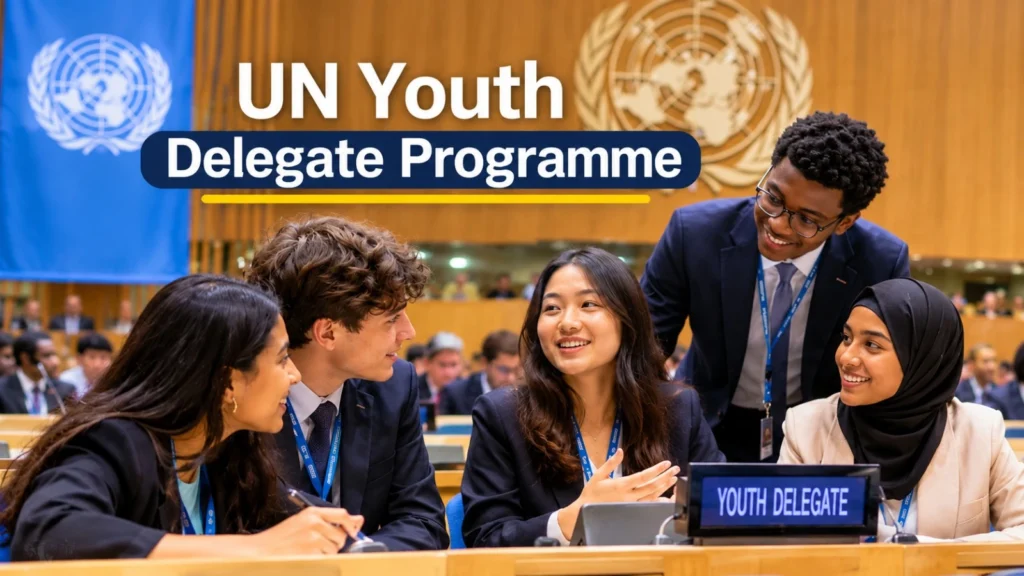
The United Nations Youth Delegate Programme provides one such opportunity by allowing young people to become part of their country’s official delegation to the United Nations General Assembly and other intergovernmental meetings.
Coordinated globally by the United Nations Department of Economic and Social Affairs (UN DESA), the programme encourages Member States to include youth representatives in international decision-making processes. For students, young professionals, youth activists and aspiring policy leaders, understanding how this programme works can be a valuable starting point.
What Is the UN Youth Delegate Programme?
The UN Youth Delegate Programme is an initiative through which young people can participate in their country’s official delegation to the United Nations.
According to the official UN DESA Youth Delegate Programme page, the United Nations Department of Economic and Social Affairs serves as the focal point for the UN’s work on youth. Within the Department, the Division for Inclusive Social Development’s Programme on Youth Unit coordinates the programme at the global level.
An important point for applicants is that the United Nations does not directly select all youth delegates through one central application process. It is the responsibility of individual Member States to establish national youth delegate programmes and decide who represents their young people at the United Nations.
The responsibilities of selected delegates can vary from country to country. Generally, they provide input to their national delegation on youth-related issues and participate in its work, including attending meetings and, where appropriate, informal negotiations.
Who Can Participate in the Programme?
The programme does not have one universal eligibility or age requirement applicable to every country. Each Member State establishes its own national selection arrangements and decides the criteria for choosing youth delegates.
The opportunity may be relevant to:
- University and college students interested in international affairs.
- Young professionals interested in public policy and governance.
- Youth activists and community representatives.
- Members of national youth councils and youth organisations.
- Individuals working on education, climate action, human rights and sustainable development.
Applicants should check the specific requirements announced by their national government. These may include age limits, nationality conditions, application documents, relevant experience and interview requirements.
The UN Guide to the Youth Delegate Programme, published as a resource for Member States, provides further information about establishing national programmes, possible delegate responsibilities and practical arrangements.
What Are the Responsibilities of a UN Youth Delegate?
The role of a youth delegate depends on the country, the official delegation and the meetings they are selected to attend.
The UN DESA programme describes youth delegates as representatives who can provide input to their country’s delegation on issues related to young people and participate in its work.
Their responsibilities may include:
1. Representing Youth Perspectives
Youth delegates bring the concerns, experiences and priorities of young people into discussions with government representatives and international decision-makers.
2. Participating in UN Meetings
Depending on their mandate, they may attend meetings of the General Assembly and relevant functional commissions of the Economic and Social Council.
3. Contributing to Discussions and Negotiations
Some delegates participate in formal meetings and informal negotiations as part of their national delegation, depending on the arrangements made by their government.
4. Communicating with Young People
Consulting youth organisations and networks can help delegates understand the priorities of young people in their country and communicate those perspectives to decision-makers.
5. Supporting Youth Participation in Policy
Their involvement can help connect national youth priorities with international discussions on social development, employment, education and other issues.
Which United Nations Meetings Can Youth Delegates Attend?
Youth delegates can participate in several intergovernmental meetings at the United Nations. The specific opportunities depend on their country’s arrangements and the meetings for which they are included in the delegation.
Some important platforms mentioned by UN DESA include:
United Nations General Assembly (UNGA)
Most official youth delegates participate in the General Assembly. Youth-related matters are generally considered by its Third Committee, which discusses social, cultural and humanitarian issues.
The relevant agenda item includes social development and questions relating to youth, ageing, persons with disabilities and the family. Its timing is subject to the annual programme of work adopted by Member States.
Commission for Social Development (CSocD)
The Commission for Social Development is a functional commission of the Economic and Social Council (ECOSOC). It focuses on issues such as poverty, employment and social integration.
The commission meets annually in February for approximately one and a half weeks. According to UN DESA, youth delegates selected for the General Assembly also frequently participate in this commission because the work of the two bodies is closely connected.
High-Level Political Forum on Sustainable Development (HLPF)
The HLPF is the United Nations’ main platform for reviewing progress on the 2030 Agenda for Sustainable Development and the Sustainable Development Goals.
Youth delegates increasingly participate in national follow-up and review processes ahead of the forum. Some are also invited to present parts of their country’s Voluntary National Review.
Other UN Meetings
Depending on national arrangements, youth delegates may also participate in the Commission on the Status of Women, the Human Rights Council and other relevant intergovernmental meetings.
Official information about these platforms is available through the UN General Assembly, Commission for Social Development and High-Level Political Forum websites.
How to Become a UN Youth Delegate
The first step is to determine whether your country already has an established youth delegate programme.
UN DESA recommends contacting the government body responsible for running the national programme. This may be the Ministry of Foreign Affairs, a National Youth Council or another relevant government institution.
The following steps can help interested applicants get started.
Step 1: Check for an Existing National Programme
Find out whether your country selects youth delegates for the General Assembly or other UN meetings. Contact the relevant government department or national youth organisation for information.
You can also consult the World Federation of United Nations Associations directory to identify United Nations Associations in different countries.
Step 2: Understand the Selection Process
If a programme exists, ask about its application procedure, eligibility requirements, selection dates and responsibilities.
Step 3: Build Relevant Experience
Participation in youth organisations, community initiatives, volunteering and policy discussions can help candidates understand the issues affecting young people.
Step 4: Prepare Your Application
Follow the official national announcement. Depending on the country, candidates may be required to provide a CV, motivation statement, experience details or other supporting documents.
Step 5: Follow the National Selection Procedure
The responsible authority establishes the nomination and selection process. Candidates should follow the instructions issued by that authority rather than relying on unofficial application links.
What If Your Country Does Not Have a Youth Delegate Programme?
UN DESA also provides guidance for young people in countries that do not currently have an established programme.
In such cases, the process involves two important steps: first, explaining to the government why youth representation in its UN delegation is important; and second, encouraging the establishment of an official position and selection procedure.
The official guidance suggests several practical actions:
- Work with existing youth organisations and national youth networks.
- Review the UN Guide to the Youth Delegate Programme and share it with relevant government authorities.
- Write to the Minister of Foreign Affairs or the equivalent authority explaining the benefits of youth representation.
- Contact the Minister for Youth, senior public servants or the country’s Ambassador to the United Nations.
- Seek support from civil society leaders and relevant youth organisations.
- Encourage the government to establish a transparent nomination and selection process.
The UN Youth Delegate Programme Guide offers practical information that can help governments establish or strengthen national programmes.
Countries Featured in the UN Youth Delegate Programme Guide
The UN Guide includes country profiles describing national approaches to youth delegate participation.
The countries featured include:
Australia, Belgium, Mexico, the Netherlands, Norway, Sri Lanka, the Republic of Korea, Thailand, Ukraine, the United Arab Emirates and the United States of America.
These examples provide useful insights into how different Member States can organise youth representation in their official delegations.
Current Youth Delegate Lists and Official Resources
UN DESA publishes information about youth delegates participating in specific United Nations sessions. Its programme page includes links to the following lists:
- Youth Delegates to the 81st Session of the UN General Assembly (UNGA81)
- Youth Delegates to the 64th Session of the Commission for Social Development (CSocD64)
Interested candidates can also explore the following resources:
- UN Youth Delegate Programme – Official UN DESA Page
- UN Youth Delegate Programme e-Brochure
- UN Guide to the Youth Delegate Programme – Second Edition
- Giving Young People a Platform at the United Nations – Official Video
Why the UN Youth Delegate Programme Matters
The UN Youth Delegate Programme is about more than attending international meetings. It creates an opportunity for young people to contribute their perspectives to discussions that influence social development, international cooperation and sustainable development.
It also highlights an important principle: youth participation should be connected to national decision-making processes, rather than treated only as an occasional consultation.
For aspiring youth leaders, the best starting point is to become informed about local and national issues, engage with youth organisations and understand how their country’s government selects official representatives.
Those interested in the opportunity should begin by contacting their Ministry of Foreign Affairs, National Youth Council or relevant national authority to find out whether a youth delegate programme exists and how to participate.
The official UN DESA programme page remains the primary source for programme information and guidance: Explore the UN Youth Delegate Programme.