
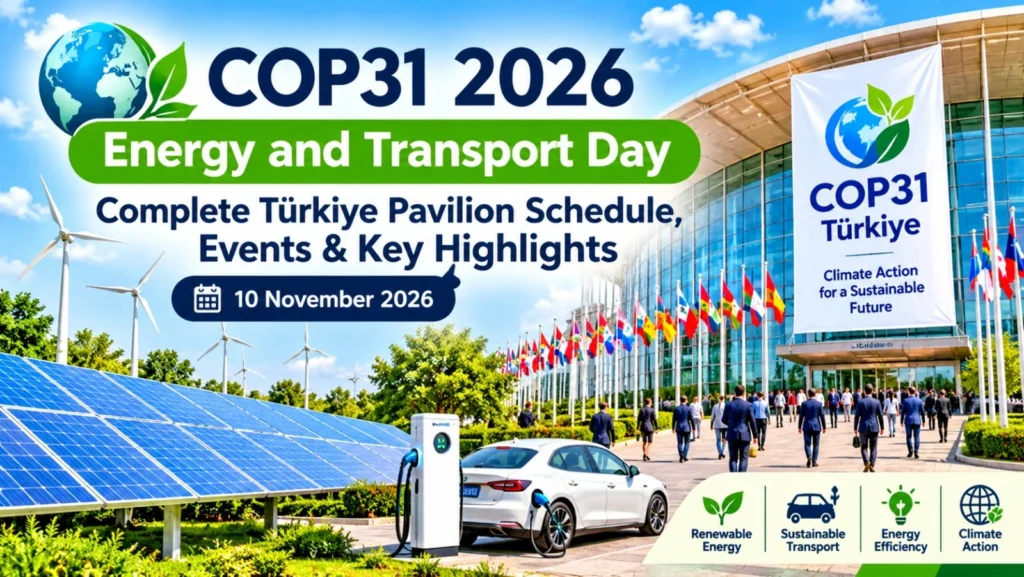
The global transition towards clean energy and sustainable transportation is becoming a major priority for governments, businesses and climate organisations. Renewable energy, electric mobility, energy efficiency and modern infrastructure are playing an increasingly important role in reducing greenhouse gas emissions.
These topics will receive attention at COP31 2026, the 31st United Nations Climate Change Conference, taking place in Antalya, Türkiye, from November 9 to 20, 2026.
One of the important thematic days is Energy and Transport Day on November 10, 2026. The Türkiye Pavilion has shared a special events programme featuring 21 sessions across three rooms. The discussions bring together government departments, international organisations, energy associations and private-sector companies to explore solutions for a cleaner energy future.
What Is COP31 2026?
COP31 is the 31st Conference of the Parties to the United Nations Framework Convention on Climate Change (UNFCCC). It provides an international platform where governments, policymakers, researchers, businesses and environmental organisations discuss climate action.
The conference focuses on turning climate commitments into practical action through renewable energy investment, emission reduction, climate finance, sustainable infrastructure and international cooperation.
COP31 will take place in Antalya, Türkiye, from November 9 to 20, 2026. Its discussions are relevant to countries worldwide, including the United States, where clean energy development, electricity infrastructure and transportation decarbonisation are important industry priorities.
COP31 Energy and Transport Day: Event Details
The shared Türkiye Pavilion programme provides the following event information:
- Event: COP31 Türkiye Pavilion – Special Events Programme: Energy and Transport
- Date: Tuesday, November 10, 2026
- Venue: Blue Zone, Türkiye Pavilion B125
- Rooms: Room 1, Room 2 and Room 3
- Main focus: Renewable energy, electrification, energy security and sustainable transportation.
The programme features seven sessions in each room, running from 10:00 AM until 6:00 PM.
Complete COP31 Türkiye Pavilion Schedule: November 10
Room 1: Energy Markets, Renewable Energy and Electrification
Room 1 focuses on energy transition, critical minerals, climate finance, renewable electricity and clean mobility.
10:00–10:45 AM – Energy Exchange Istanbul (EPİAŞ)
From Carbon Markets to Transition Finance: Navigating the New Climate Economy.
11:15 AM–12:00 PM – Ministry of Energy and Natural Resources
Critical Minerals: Global Supply Chains and Türkiye’s Unique Position.
12:30–1:15 PM – Ministry of Energy and Natural Resources
Efficiency and Electrification: Powering the Path to Net Zero.
1:30–2:15 PM – TOGG
From Electrification to Mobility.
2:45–3:30 PM – International Renewable Energy Agency (IRENA)
Scaling Renewable Energy: Strengthening Energy Security, Climate Action, and Regional Cooperation.
4:00–4:45 PM – ELDER – Utilities for Net Zero Alliance (UNEZA)
Delivering Energy Transition: Interconnection, Grids, Finance, and COP31 D-GRID Initiative.
5:15–6:00 PM – Turkish Energy, Nuclear and Mineral Research Agency (TENMAK)
The Role of Nuclear Energy in Clean Energy Transition: Small Modular Reactors.
Room 2: Sustainable Infrastructure, Energy Access and Transportation
Room 2 highlights how infrastructure, digital technologies and transportation systems can contribute to climate goals.
10:00–10:45 AM – Airports Council International (ACI) Europe
Leveling Up Airport Climate Action: From Türkiye to the World.
11:15 AM–12:00 PM – Arçelik A.Ş.
Cooling a Warming World: Access to Energy and Climate Resilience in Emerging Markets.
12:30–1:15 PM – German Energy Agency (dena)
Digital Transformation in Distribution Grids.
1:30–2:15 PM – Ministry of Environment, Urbanization and Climate Change
Policies for Harmonizing Buildings with Global Targets.
2:45–3:30 PM – Türk Telekom
Sustainable Finance and Clean Energy.
4:00–4:45 PM – Ministry of Transport and Infrastructure
Decarbonization in Oceans and Seas & Sustainable Maritime Fuels.
5:15–6:00 PM – Ministry of Transport and Infrastructure
Climate-Resilient Transport: Enhancing Adaptation and Resilience in Transport Infrastructure.
Room 3: Wind Energy, Climate Policy and Industrial Decarbonization
Room 3 brings attention to wind energy, clean energy leadership, European climate policies and industrial emission reduction.
10:00–10:45 AM – Turkish Wind Energy Association (TÜREB)
Mobilizing Türkiye’s Wind Energy Potential: Policies, Cooperation, and Climate Targets.
11:15 AM–12:00 PM – Energy Industrialists’ and Businesspeople’s Association (ENSİA)
From Production to Climate Leadership: Türkiye’s Role in Clean Energy Transition.
12:30–1:15 PM – ERCST – European Commission DG TAXUD
Climate Policies and Green Transformation: EU Perspectives and Current Initiatives.
1:30–2:15 PM – Climate Change Presidency
COP31 Presidency Event – Presidential High-Level Event.
2:45–3:30 PM – World Nuclear Association (WNA)
Powering Clean Energy Transition: Advanced Nuclear Technologies and Energy Security.
4:00–4:45 PM – EU Delegation to Türkiye – Electricity Generators Association (EÜD)
Delivering Energy Transition Together: Building an Integrated Electricity System.
5:15–6:00 PM – Oil and Gas Decarbonization Charter (OGDC)
Scaling Action Across the Sector: Delivering Commitments to Reduce Methane Emissions.
Schedule note: All 21 session titles, organisations and timings above are transcribed from the supplied programme image. Confirm individual pavilion sessions and room assignments against the latest official event listings before publishing them as verified events.
Why Are Energy and Transport Important for Climate Action?
Energy production and transportation are closely connected to global greenhouse gas emissions. Moving towards renewable electricity, efficient energy systems and cleaner transportation can help countries reduce their environmental impact.
The programme highlights several important areas:
- Renewable energy: Expanding solar and wind power while improving electricity infrastructure.
- Electric mobility: Supporting electric vehicles and charging infrastructure.
- Energy storage: Developing battery technologies to improve renewable energy reliability.
- Climate finance: Mobilising investment for low-carbon infrastructure.
- Industrial decarbonization: Reducing emissions from manufacturing and energy-intensive industries.
- Sustainable transportation: Improving aviation, shipping and public transport systems.
These priorities are relevant to the global economy, including businesses and policymakers working on clean energy development and climate strategies in the United States.
Green Career Opportunities Emerging from the Energy Transition
The clean energy transition is creating demand for professionals with technical, environmental and analytical skills.
People interested in sustainability can explore career paths such as:
- Renewable Energy Engineer
- Sustainability Analyst
- ESG Consultant
- Climate Research Associate
- Energy Efficiency Specialist
- Electric Vehicle Technology Specialist
- Carbon Market Analyst
- Sustainable Transportation Planner
- Climate Finance Associate
Knowledge of environmental science, engineering, data analytics, energy management and sustainability reporting can help professionals prepare for these opportunities.
Following international climate discussions such as COP31 can also help students and early-career professionals understand changing industry requirements.
How to Follow COP31 2026 Updates
Readers can follow conference announcements and programme updates through the following resources:
- COP31 Official Website: https://cop31.tr/
- COP31 Programme Overview: https://cop31.tr/programme-overview
- UNFCCC COP31: https://unfccc.int/cop31
Always check the latest official announcements for changes to event schedules and participation arrangements.
Frequently Asked Questions
1. When is COP31 Energy and Transport Day 2026?
Energy and Transport Day is scheduled for November 10, 2026.
2. Where will the Türkiye Pavilion events take place?
The supplied programme lists the Blue Zone, Türkiye Pavilion B125.
3. How many sessions are included in the programme?
The infographic lists 21 sessions across three rooms, with seven sessions in each room.
4. What are the main topics covered?
The programme includes renewable energy, critical minerals, electric mobility, energy efficiency, sustainable finance, electricity grids, nuclear technology and transportation decarbonisation.
5. Is COP31 relevant to US sustainability professionals?
Yes. Discussions about clean energy, electric mobility, climate finance and industrial decarbonisation are relevant to professionals and businesses working in these sectors worldwide.
Conclusion
COP31 Energy and Transport Day brings together important discussions about the future of energy and transportation. The Türkiye Pavilion programme features 21 sessions covering renewable energy, electrification, energy security, sustainable infrastructure and industrial decarbonisation.
For businesses, researchers, students and sustainability professionals, these discussions provide useful insights into emerging climate technologies and industry priorities.
As the global transition towards a low-carbon economy continues, cooperation between governments, businesses and technology developers will be essential to delivering meaningful climate progres