
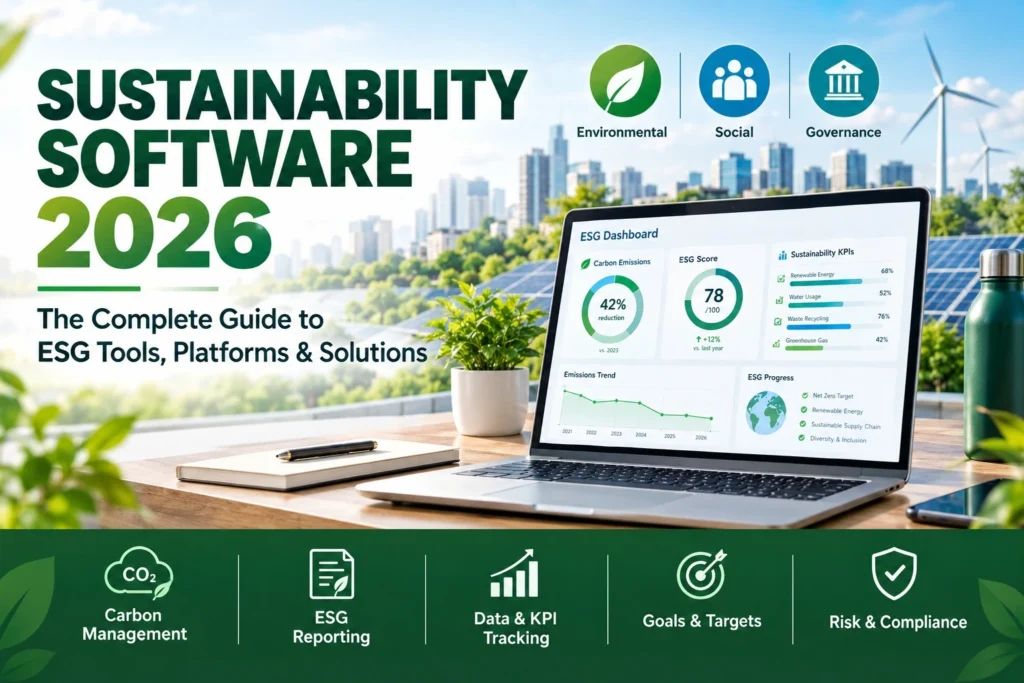
Sustainability software is becoming an important part of how organizations manage environmental, social, and governance (ESG) information. Instead of tracking emissions, energy use, waste, supplier information, sustainability targets, and reporting data across disconnected spreadsheets, organizations can use digital platforms to bring these activities into a more structured system.
In 2026, sustainability teams are increasingly looking for software that can do more than generate reports. Modern platforms can support data collection, carbon accounting, target tracking, supplier engagement, sustainability reporting, and performance analysis.
The right software can help organizations build a clearer picture of their sustainability performance and identify where better data, processes, or operational changes may be needed.
What Is Sustainability Software?
Sustainability software is a category of digital technology designed to help organizations collect, manage, analyze, and report sustainability-related information.
Depending on the platform, it may support:
- Greenhouse gas emissions tracking
- Scope 1, Scope 2, and Scope 3 emissions
- Energy and fuel consumption
- Water usage
- Waste management
- Renewable energy data
- Supply-chain sustainability
- ESG performance indicators
- Sustainability targets
- Environmental reporting
- ESG disclosures
- Documents and supporting evidence
- Sustainability dashboards
Some platforms are designed primarily for carbon accounting, while others provide broader sustainability management capabilities.
Organizations should therefore compare actual features rather than selecting software based only on the terms used in a product name.
Why Is Sustainability Software Important?
Sustainability information can come from many different parts of an organization.
Energy data may come from utility bills, emissions information may be maintained by an environmental team, supplier information may sit with procurement, and sustainability documentation may be stored in separate systems.
Managing all of this manually can make it harder to maintain consistent data.
Sustainability software can provide a centralized environment for organizing this information.
1. Centralized Sustainability Data
A platform can bring sustainability information together instead of requiring teams to maintain multiple disconnected spreadsheets.
2. Carbon Accounting
Many sustainability platforms help organizations calculate and monitor greenhouse gas emissions.
This can include emissions associated with:
- Purchased electricity
- Fuel consumption
- Company facilities
- Transportation
- Business travel
- Purchased goods and services
- Waste
- Other value-chain activities
The GHG Protocol provides widely used standards and guidance for corporate greenhouse gas accounting and reporting.
3. Sustainability Reporting
Software can help teams organize information for sustainability reports, customer questionnaires, investor requests, internal reporting, and environmental disclosure processes.
4. Performance Monitoring
Dashboards can make it easier to monitor trends and compare sustainability performance across facilities, departments, business units, or reporting periods.
5. Target Tracking
Organizations can use software to monitor progress toward environmental and sustainability targets instead of relying entirely on manual calculations.
Key Features of Sustainability Software
The features required will depend on an organization’s size, industry, reporting needs, and sustainability strategy.
| Feature | What It Can Help With |
| Carbon accounting | Measuring and managing greenhouse gas emissions |
| Scope 1, 2 & 3 tracking | Organizing emissions by source |
| Energy management | Monitoring electricity and fuel consumption |
| Sustainability dashboards | Viewing environmental and ESG performance |
| Data collection | Gathering information from different sources |
| Supplier management | Collecting sustainability information from suppliers |
| Target tracking | Monitoring progress against sustainability goals |
| Reporting tools | Preparing sustainability and ESG reports |
| Audit trails | Maintaining records supporting reported information |
| Document management | Organizing evidence and sustainability documentation |
| Data integrations | Connecting sustainability data with other business systems |
A strong platform should provide visibility into the underlying information, not simply present polished charts.
Organizations should be able to understand where important data originated, when it was updated, and who is responsible for maintaining it.
ESG Software vs. Sustainability Software
ESG software and sustainability software overlap significantly, but their primary focus can differ.
ESG software may place greater emphasis on environmental, social, and governance indicators, risk management, disclosures, controls, and structured reporting.
Sustainability software may focus more heavily on operational environmental information such as:
- Carbon emissions
- Energy
- Water
- Waste
- Renewable energy
- Sustainability targets
- Resource efficiency
Many modern platforms combine both approaches.
For this reason, organizations should define their requirements before choosing a platform. A business primarily looking for carbon accounting may need different capabilities from an organization managing enterprise-wide ESG reporting.
Common Types of Sustainability Software
The sustainability software market includes several categories.
Carbon Accounting Software
These platforms focus on calculating and monitoring greenhouse gas emissions across organizational operations and, where supported, the value chain.
ESG Reporting Software
These tools help organizations collect ESG information, organize disclosures, manage reporting workflows, and maintain supporting documentation.
Sustainability Management Platforms
These platforms provide broader capabilities covering emissions, energy, water, waste, targets, reporting, and other sustainability activities.
Energy Management Software
Energy-focused systems help organizations monitor energy consumption and identify opportunities for efficiency improvements.
Supply-Chain Sustainability Software
These solutions help organizations collect sustainability information from suppliers and monitor environmental or social performance across supply chains.
Important Sustainability Frameworks and Resources
Software should support the frameworks and reporting requirements that are relevant to the organization.
| Resource | Purpose |
| GHG Protocol | Greenhouse gas accounting and reporting standards |
| CDP | Environmental disclosure and questionnaire platform |
| IFRS Sustainability Standards | Global sustainability disclosure standards |
| ENERGY STAR Portfolio Manager | Tracking energy, water, waste, and emissions performance for buildings |
| UN Sustainable Development Goals | Framework of global sustainable development goals |
The GHG Protocol is particularly important for organizations calculating corporate greenhouse gas emissions.
The CDP disclosure system is also widely used by organizations reporting environmental information.
However, software does not automatically make an organization compliant with every applicable requirement. Teams should verify the relevant standards, laws, frameworks, and reporting requirements independently.
What Should You Look for in Sustainability Software?
Choosing a platform should begin with the organization’s actual sustainability workflow.
Consider these questions before making a decision:
- What sustainability data do we currently collect?
- Where is the information stored?
- How much of the process is currently manual?
- Do we need Scope 1, Scope 2, or Scope 3 emissions tracking?
- Do we need supplier sustainability data?
- Which reporting frameworks are relevant to our organization?
- Do we need energy, water, and waste management?
- Can the platform integrate with existing systems?
- Does it provide an audit trail?
- Can multiple teams collaborate within the platform?
- Can sustainability targets be monitored over time?
- How easily can the platform adapt when reporting requirements change?
These questions can help organizations separate essential capabilities from features that may not be necessary.
Benefits of Using Sustainability Software
When implemented effectively, sustainability software can help organizations create a more organized sustainability management process.
Potential benefits include:
- Better visibility into sustainability data
- Reduced dependence on disconnected spreadsheets
- More consistent data collection
- Improved emissions tracking
- Easier sustainability reporting
- Better monitoring of targets
- Centralized documentation
- Improved collaboration between teams
- Greater visibility into sustainability performance
- More structured supplier engagement
The value of the software ultimately depends on the quality of the information being entered and the processes used to manage it.
Sustainability Software Trends in 2026
Sustainability software is moving toward more connected and data-driven workflows.
Organizations are increasingly interested in platforms that can connect sustainability information with operational and business data. Automated data collection, improved emissions calculations, supplier engagement, analytics, and reporting workflows are becoming important areas of development.
Another major focus is data quality.
As sustainability reporting becomes more structured, organizations need reliable information that can be traced back to its source. This makes data governance, evidence management, audit trails, and accountability increasingly important.
Artificial intelligence and automation are also being explored for tasks such as data classification, document analysis, anomaly detection, and reporting support. However, organizations should review automated outputs carefully, particularly when information is used for formal reporting.
How to Choose the Right Sustainability Software
There is no single sustainability platform that is suitable for every organization.
A smaller organization may primarily need emissions and energy tracking, while a large enterprise may require carbon accounting, supplier engagement, reporting workflows, data integrations, audit trails, and multi-location management.
Before purchasing software, define the sustainability problems you want to solve.
Start with your current data, reporting requirements, sustainability targets, users, and workflows. Then compare platforms based on functionality, usability, integrations, scalability, data security, reporting capabilities, and total cost.
Most importantly, treat sustainability software as a management tool rather than a substitute for sustainability strategy.
A platform can organize information and improve visibility, but meaningful sustainability performance still depends on accurate data, clear targets, accountable teams, and practical action.
Final Takeaway
Sustainability software can help organizations move from fragmented sustainability data toward a more connected and structured approach to ESG and environmental management.
From carbon accounting and emissions tracking to sustainability reporting, supplier data, target management, and performance dashboards, these platforms can support different stages of an organization’s sustainability journey.
The best starting point is not choosing the most feature-rich platform. It is understanding what information the organization needs to manage, which reporting requirements apply, and which workflows need improvement.
As sustainability data becomes increasingly important for business decision-making, the ability to collect, organize, verify, and understand that information will remain a key part of effective sustainability management.
The Complete Guide to ESG & Sustainability Software