
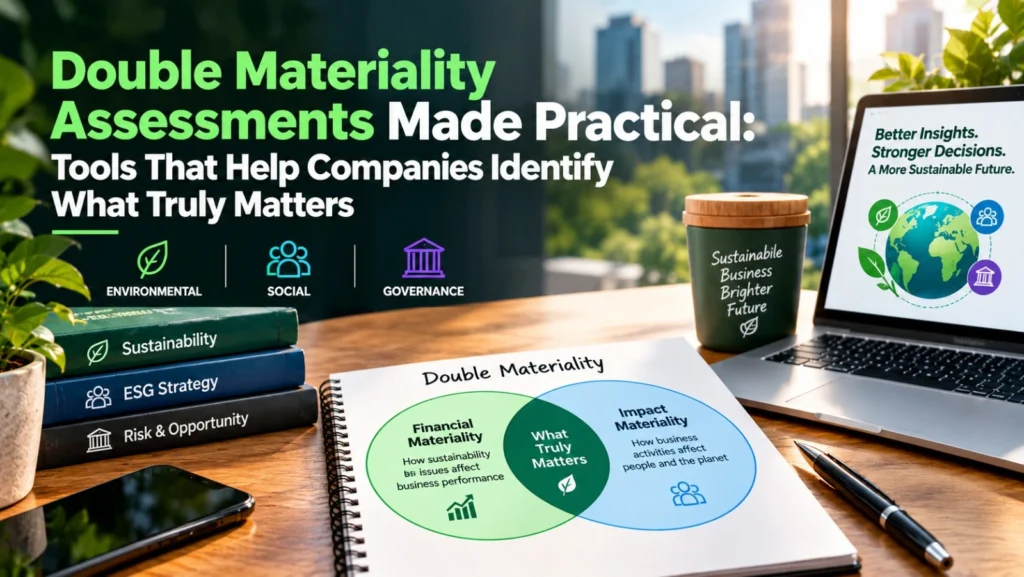
Double materiality assessments are becoming an important part of sustainability reporting, particularly for companies preparing for European sustainability disclosure requirements. However, the process can quickly become complicated when businesses try to evaluate every environmental, social and governance (ESG) topic at once.
The challenge is not simply collecting sustainability data. It is identifying which issues genuinely matter to the business, its stakeholders and the wider world.
The right approach combines clear objectives, meaningful stakeholder engagement and reliable tools. Technology can make the process easier, but it cannot replace good judgement.
What Is a Double Materiality Assessment?
A double materiality assessment examines sustainability from two different perspectives.
Impact materiality considers how a company affects people and the environment. Examples include greenhouse gas emissions, working conditions, biodiversity loss and supply chain practices.
Financial materiality examines how sustainability-related issues can affect a company’s financial position, performance, cash flow, access to finance or future prospects. Climate risks, changing regulations, resource shortages and reputational damage may all have financial consequences.
An issue can be material from either perspective or both. For example, a manufacturer’s carbon emissions may affect the climate while also exposing the company to carbon pricing, changing customer expectations and transition costs.
Understanding these connections helps businesses focus their reporting on the sustainability matters that deserve attention.
Why Do Companies Struggle With Double Materiality?
Many organisations begin with long ESG questionnaires and extensive spreadsheets. While these can collect useful information, they do not automatically produce a meaningful assessment.
Three challenges appear regularly.
First, businesses struggle to distinguish significant impacts from issues that are simply easy to measure. Energy consumption may have readily available data, while human rights risks in distant supply chains may require deeper investigation.
Second, stakeholder engagement can become a box-ticking exercise. Collecting responses is not enough; companies need to understand which concerns are relevant and why.
Third, responsibility is often spread across sustainability, finance, legal, procurement and risk teams. Without clear ownership, information becomes fragmented and decisions are delayed.
A successful assessment needs a structured process before it needs sophisticated software.
Which Tools Can Make the Process Easier?
There is no single platform that suits every organisation. The best choice depends on the company’s reporting obligations, size, supply chain complexity and existing systems.
1. ESG Reporting Platforms
ESG reporting software can centralise sustainability data, document assessment decisions and connect material topics with reporting requirements.
Platforms such as Workiva and Diligent Sustainability may be worth evaluating for organisations that need structured reporting workflows, governance controls and collaboration across departments.
Before selecting a platform, check whether it supports your specific double materiality methodology. A product marketed for ESG reporting should not automatically be assumed to provide every assessment feature your team needs.
2. Sustainability Data Management Tools
Some companies need better ways to gather emissions, energy, workforce and supplier information before conducting a detailed assessment.
Platforms such as IBM Envizi can help organisations manage environmental and sustainability data. These capabilities may be useful when the assessment depends on reliable information from multiple facilities or business units.
However, data management and double materiality assessment are not the same thing. Confirm how the tool supports impact identification, financial risk analysis, stakeholder input and documented scoring.
3. Governance and Risk Management Software
Existing governance, risk and compliance systems may help companies connect sustainability topics with enterprise risk management.
This can be valuable when financial materiality needs input from finance, legal, compliance and risk teams. Rather than creating another disconnected reporting process, organisations can investigate whether their current systems can support the required evidence and approval workflows.
4. Spreadsheets and Structured Templates
Smaller companies may be able to begin with spreadsheets, interview records, stakeholder surveys and a documented scoring framework.
This approach can be cost-effective when the assessment has a manageable scope and a small team. The limitation is that version control, audit trails and cross-department collaboration become harder as complexity increases.
The goal should be to choose the simplest system that supports a defensible assessment, not the most expensive platform available.
How to Conduct a More Useful Assessment
Technology works best when the process is clear.
Step 1: Understand your business. Map your operations, products, locations, suppliers and value chain. Identify where significant environmental and social impacts could occur.
Step 2: Identify relevant sustainability topics. Consider climate change, pollution, water, biodiversity, resource use, employees, affected communities, consumers and business conduct. Determine which topics are relevant to your organisation rather than assuming every topic has equal importance.
Step 3: Engage the right stakeholders. Gather evidence from employees, suppliers, customers, affected communities and internal specialists where relevant. Record how their perspectives influence the assessment.
Step 4: Evaluate impact and financial materiality separately. Apply documented criteria to assess the significance of impacts and the potential financial effects of sustainability-related risks and opportunities. Avoid allowing financial considerations to automatically override significant impacts on people or the environment.
Step 5: Document and review decisions. Record the evidence, assumptions, scoring rationale, responsible teams and approval process. Revisit the assessment when the business, its value chain or external conditions change.
What Should You Look for Before Buying Software?
A useful platform should support transparent scoring, evidence management, stakeholder engagement and clear reporting workflows.
Ask vendors to demonstrate how the system records assessment decisions, distinguishes impact from financial materiality, manages changes and exports information for review. Check integration requirements, implementation costs, user training and ongoing support.
Also establish whether the software supports your applicable reporting framework and current regulatory requirements. Software features and regulatory expectations change, so verify claims during procurement.
The Real Measure of Success
A double materiality assessment should do more than produce a polished report. It should help a company understand its most significant sustainability impacts, risks and opportunities, assign responsibility and make better-informed decisions.
The most effective tool is the one that supports that outcome without creating unnecessary complexity.
Before investing in a new platform, ask three questions: What decisions must this assessment support? What evidence do we need to defend those decisions? And can our existing systems already do part of the job?
Answering these questions first makes it easier to select the right tools, control costs and build a sustainability process that delivers lasting value.